
Bruno Munari’s Fantasia is not a single, fixed object but a constellation of ideas, practices, and pedagogical impulses that reflect Munari’s lifelong exploration of creativity, perception, and the playful edge of design. Published in several forms across his career (notably in books like Fantasia and later editions aimed at children and educators), Fantasia embodies Munari’s belief that imagination is a skill to be cultivated through tactile experience, visual experimentation, and structured play. This essay examines Fantasia’s origins, core themes, methods, influence on visual culture and education, and its continuing relevance in contemporary design practice.
Using a simple sheet of white paper, Munari shows how to create tactile textures, transparent overlays, and three-dimensional structures. He treats paper not as a surface, but as a raw material with its own physical properties. fantasia bruno munari pdf
Munari distinguishes between four interrelated but distinct mental faculties: Bruno Munari’s Fantasia is not a single, fixed
Similar to fantasy in that it creates something new, but it is strictly governed by functionality . An invention must work; it solves a technical or practical problem. Using a simple sheet of white paper, Munari
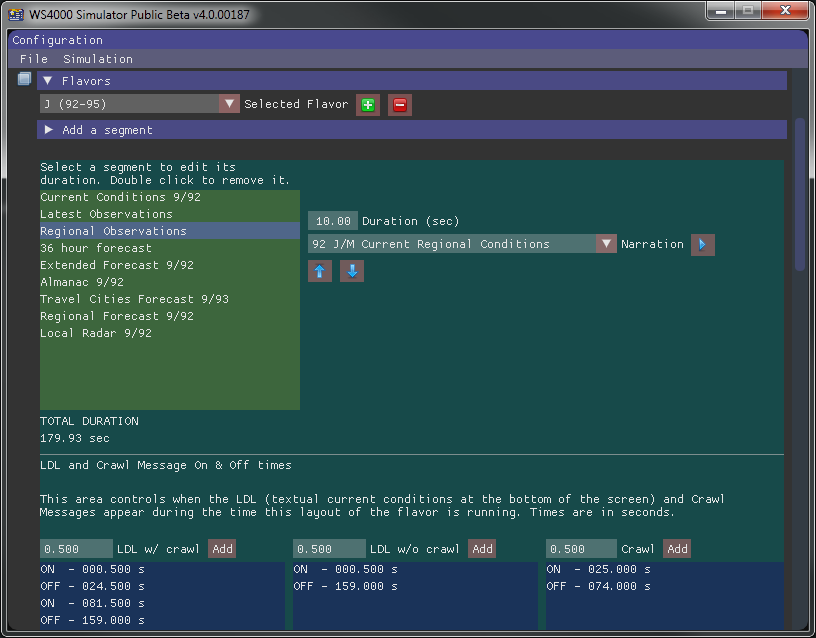
Create your own lineups (flavors) or choose from dozens of built-in ones. Control ordering, time on screen, narration type. Fine-tune LDL behavior. You can even define exactly how fast the local radar frames animate.
The simulator incorporates the FMOD sound engine, a proven audio solution with a long history of being utilized in several AAA game titles. With the FMOD sound engine, a variety of non-DRM protected codecs are supported for your music files.
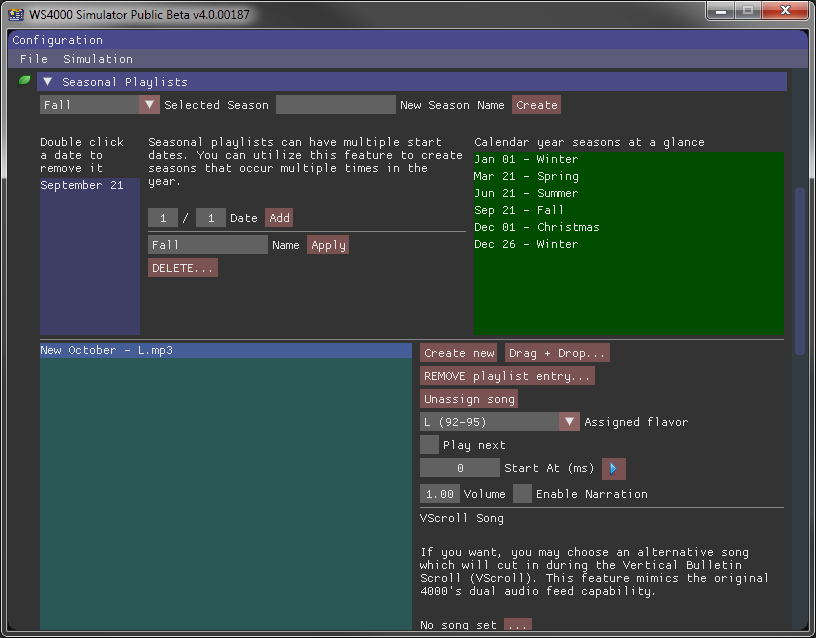
Detailed customizations are possible, including millisecond precision on when a song starts, associating a song with a flavor, and even having a different song file play during Vertical Bulletin Scroll advisories.
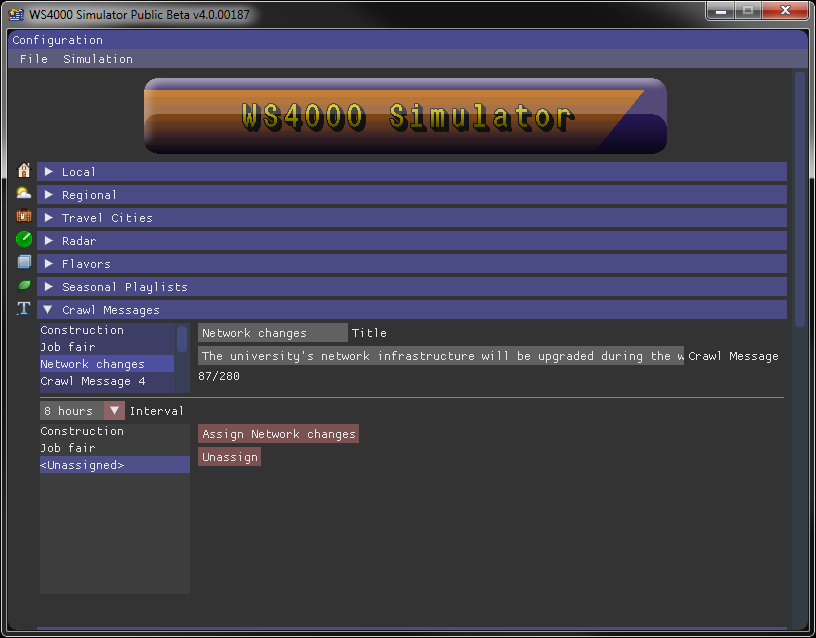
You can even add your own messages to be scrolled on the LDL, just like the 4000 did. Ten different crawl messages can be stored along with the ability to schedule them from 15 minute display intervals up to 24 hours.
The configuration and time scheduling functionality for crawl messages was modeled precisely after the 4000's.
Bruno Munari’s Fantasia is not a single, fixed object but a constellation of ideas, practices, and pedagogical impulses that reflect Munari’s lifelong exploration of creativity, perception, and the playful edge of design. Published in several forms across his career (notably in books like Fantasia and later editions aimed at children and educators), Fantasia embodies Munari’s belief that imagination is a skill to be cultivated through tactile experience, visual experimentation, and structured play. This essay examines Fantasia’s origins, core themes, methods, influence on visual culture and education, and its continuing relevance in contemporary design practice.
Using a simple sheet of white paper, Munari shows how to create tactile textures, transparent overlays, and three-dimensional structures. He treats paper not as a surface, but as a raw material with its own physical properties.
Munari distinguishes between four interrelated but distinct mental faculties:
Similar to fantasy in that it creates something new, but it is strictly governed by functionality . An invention must work; it solves a technical or practical problem.