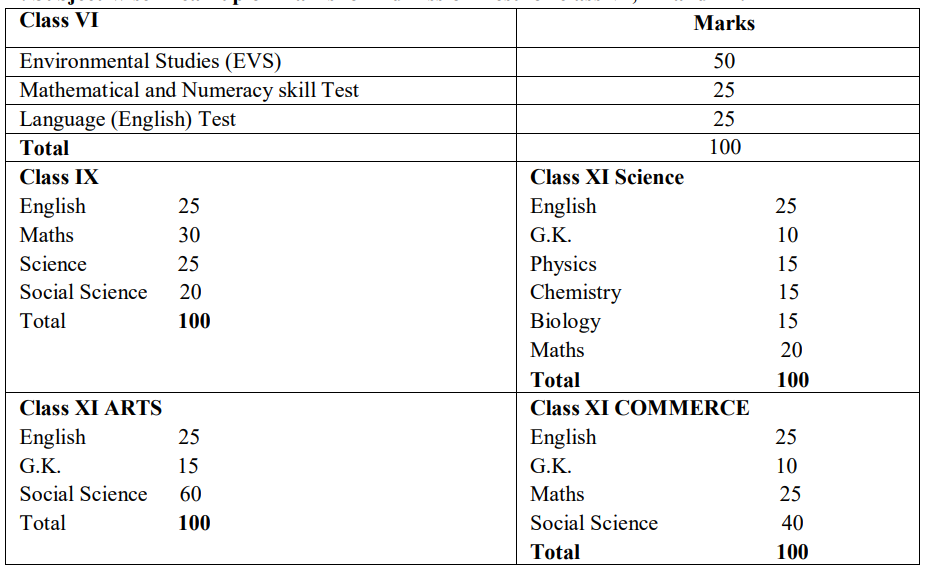
Subject-wise Break-up of Marks for Admission Test for class VI, IX and XI:
Metal is poured as liquid into a mold. Cast structures have coarse grains and possible porosity – adequate for many applications but lower ductility and fatigue resistance than wrought metal.
Covers the entire spectrum of metallurgy, including structural steels, cast irons, tool steels, stainless steels, and nonferrous metals. Practical Applications:
Unlike wood or plastic, most engineering metals are crystalline. Atoms arrange themselves in repeating three‑dimensional patterns called unit cells. The three common structures are:
All test papers will consist of 100 multiple choice objective type questions of one mark each.
Metal is poured as liquid into a mold. Cast structures have coarse grains and possible porosity – adequate for many applications but lower ductility and fatigue resistance than wrought metal.
Covers the entire spectrum of metallurgy, including structural steels, cast irons, tool steels, stainless steels, and nonferrous metals. Practical Applications: metallurgy for the non-metallurgist pdf
Unlike wood or plastic, most engineering metals are crystalline. Atoms arrange themselves in repeating three‑dimensional patterns called unit cells. The three common structures are: Metal is poured as liquid into a mold